

I can’t remember a time when I called customer service for an issue, and the call was answered by the third ring. I got to make a human connection with a fellow being who listened to me with an empathetic ear. They responded off-script, their voice betrayed a hint of emotion, and then having truly heard and understood me, proceeded to resolve the issue to my satisfaction.
Perhaps I’m romanticising a conversation with customer service and projecting my love language needs here. But, if you’re asking me – a true-blooded customer for a brief on what creates value for me, where the pain points are, what ‘good’ looks like, and what meets the bar on acceptability, accessibility and usability – it’s that 👆🏼
I like speed, scale, accuracy and efficiency as much as the next Industrial revolutionist. I also agree automation can add value by increasing speed, reducing human error, and lower operating costs, but in the case of customer service, what if automation comes at the cost of what the customer values?
The ethos of customer support today seems to prioritise low-touch, brevity of communication/call times and minimal time-taken in resolving of tickets.
The pathos of the customer when seeking redressal places value in empathy, clarity and a resolving of their issue.
Demonstrating the above in the form and flow of a (acc)user story –
I’ve transacted with my money in exchange for goods or a service, and something has gone wrong. I now have to spend more of my currency, in the form of time and (try to) reach out to customer service for a resolution. This can go one of ‘n’ number of ways. For illustration purposes, I will only flesh out the prioritised use-cases encountered as (if) they flow in a waterfall model..
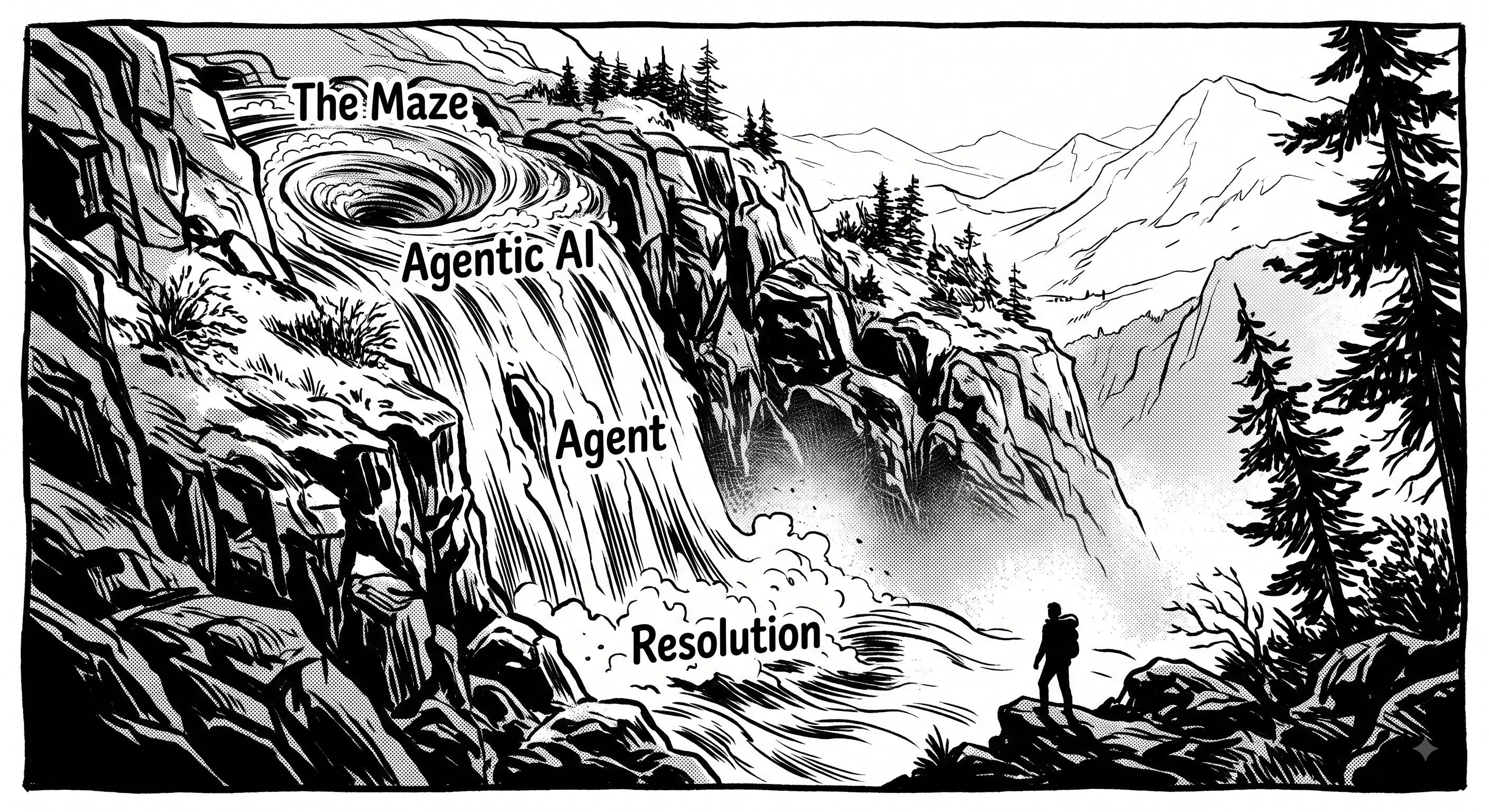
The Maze
Suddenly there’s a UX paradox at play,
A counterstrategy to the single click happy path, much to my dismay!
I have to jump through many hoops, MCQs , and some infinite loops…
At the end of that tunnel (vision), I’m rewarded with a chat or call-back from customer “care”. Big whoop!
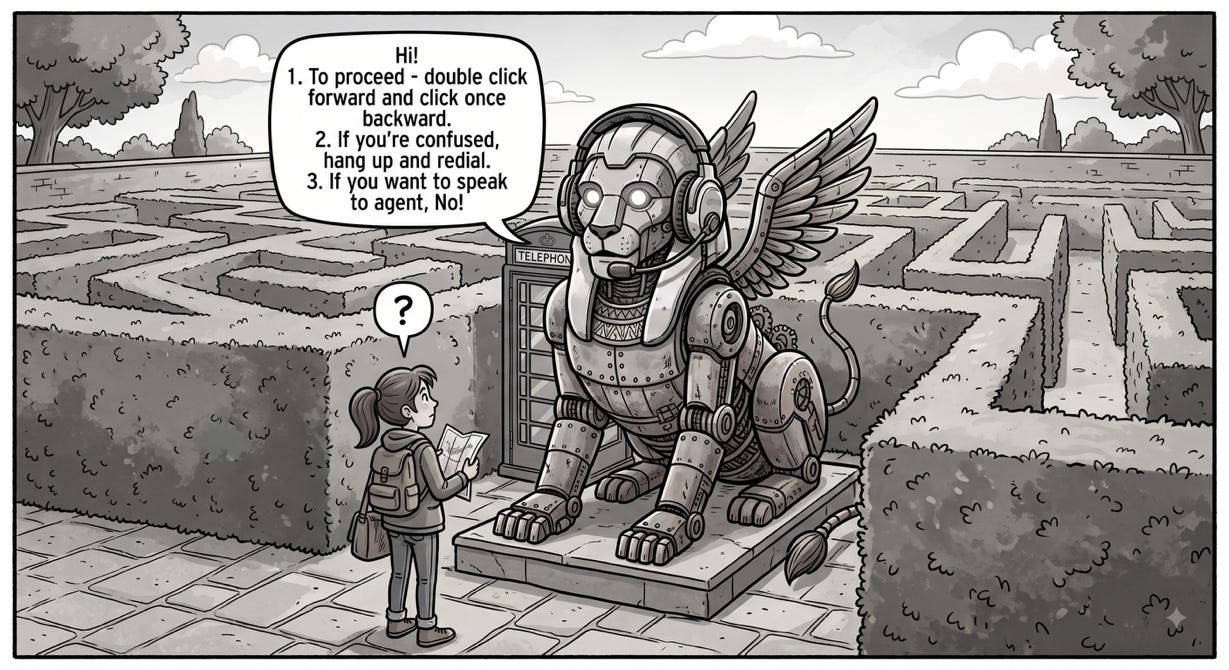
The Road Less Travelled: Agentic AI to an Agent
Along this path, I have encountered many a bot that “don’t get me”, or categorise my needs as “Other”. And after looping back (and forth), seemingly incentivised by ‘Low to No’ customer contact, and a strategy to frustrate and discombobulate, allowing only the most resilient customer pass through.
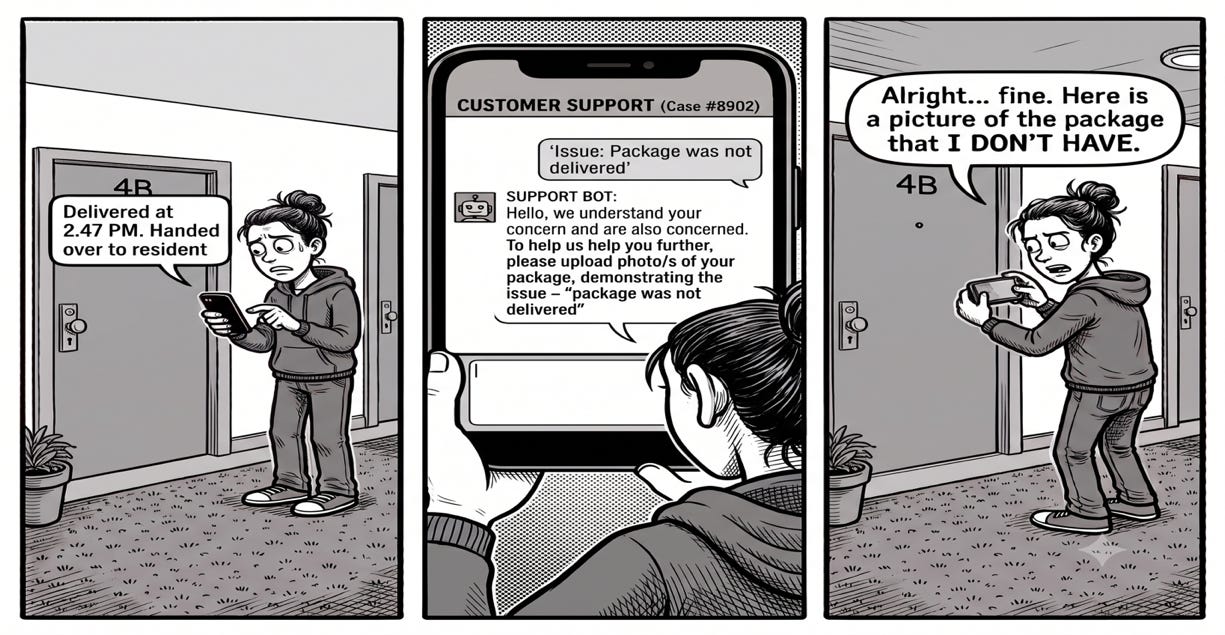
To an Agent to whom I now confess my deep sorrows and disappointments. At this stage I am usually gratified with a monotone response, about how sorry they are that I’ve had this terrible experience, and in the same breath reassured that they will be helping me out. I am transferred from agent to agent, until I’m familiar with the organisation structure and the extent of cross-(dys)functional operations. I’ve now recounted my chiseled & toned tale of regret up and down the chain of command until I reach that elusive agent of change who is willing to go out of their way to record my use case via mail, and a promise to resolve this by dd-mm-yyyy (pick your format) with the epilogue that if it’s not resolved by then, I can call them back after this date and Wince and Repeat this flow, where humans, humanness, humaneness and humanity appear to have been deprecated.
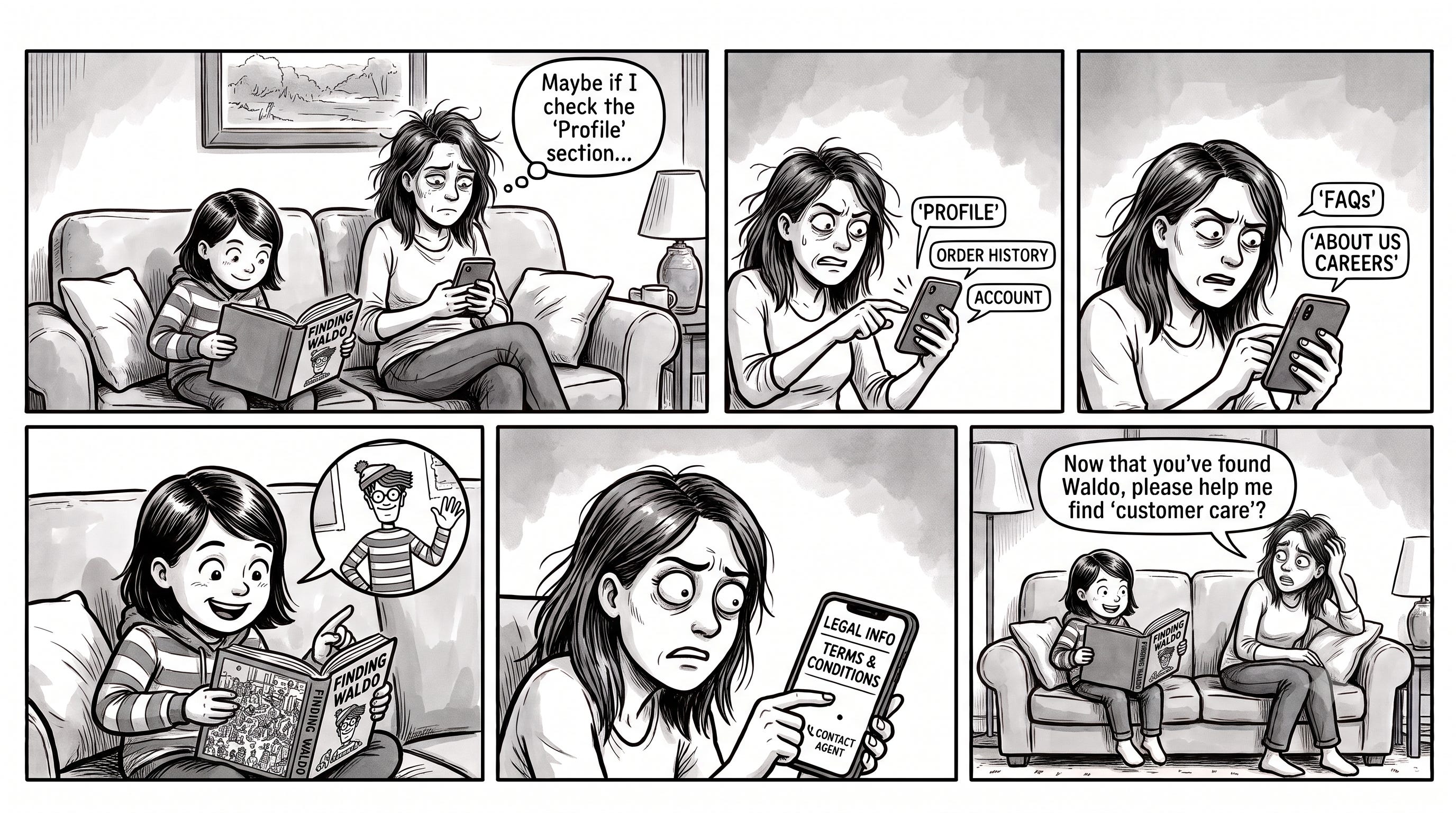
If I have the wherewithal to fight the system, and persevere in my quest for justice dot dot dot..
I may be able to extract a return & refund for the product/service bought,
But also, no recourse for the time and sanity lost.
Never fear though because there will be a woke emoji survey, to capture my thoughts.

Automating standard responses, limiting call-times, resolving the ticket without resolving my issue, or giving me the run around isn’t solving my problem as a customer. So, what customer problem is being solved?
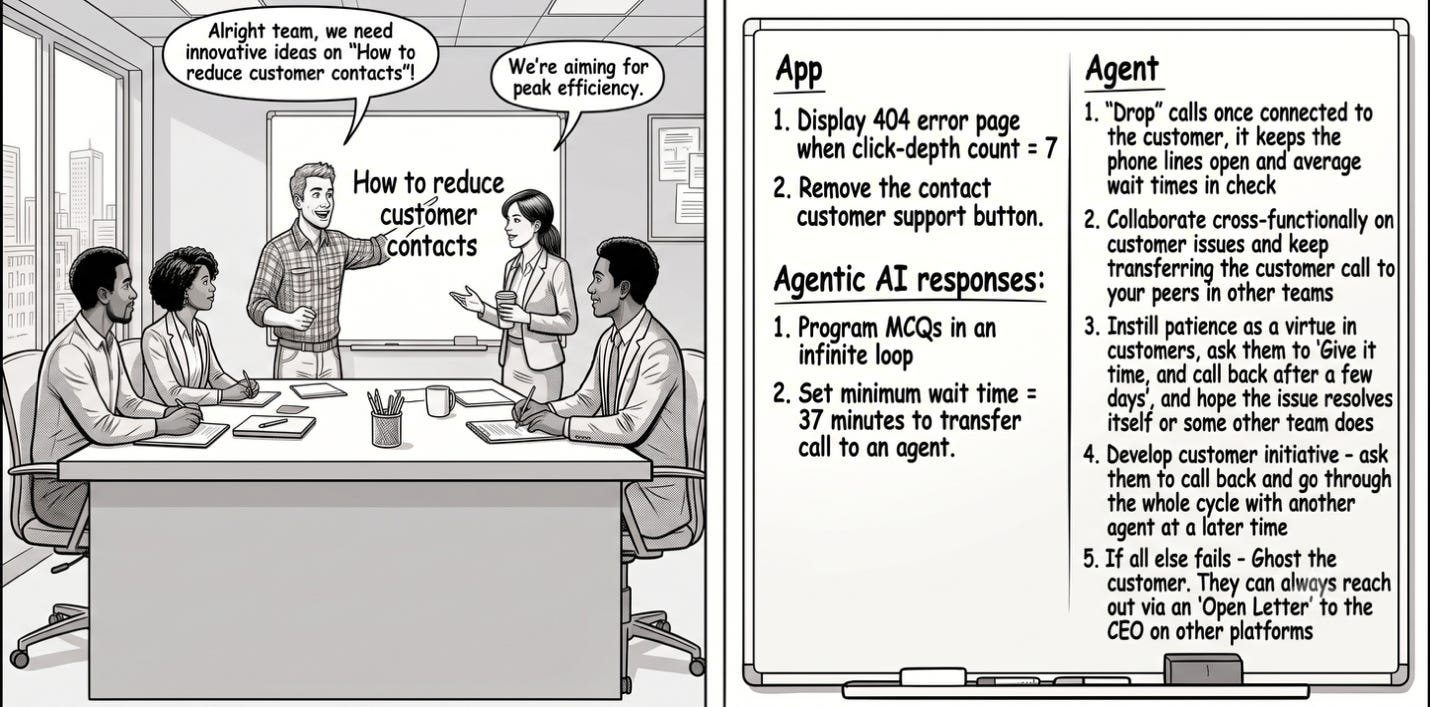
It seems to be trending toward solving for the customer problem, by taking the customer out of the equation altogether.
The Demonetisation of Customer Service has occurred through systemic and systematic dehumanisation of the process, demonisation of the ‘act of service’, deterioration of the customer experience and demoralisation of the customer themselves.
This desperately warrants a product recall, service rehaul or whatever it takes to achieve a throwback to the form of support that the customer needs, wants, desires and deserves! To know what that is, refer to the first few lines of this note and consider it my customer callback.